







Custom Flat Bottom Bag – Specifications
| Brand | BIOPOUCHES |
| Structure | Flat bottom bag with side gussets |
| Materials | Plant-based biodegradable material (specified option) |
| Thickness | 130 microns (listed specification) |
| Sizes | Custom dimensions |
| Printing | Gravure; 3D printing listed (confirm method) |
| Finishes | Custom surface finish (confirm availability) |
| Closure | Resealable zipper top |
| Applications | Coffee packaging |
| Quality Checks | Dimensions, printing, folds, seals and zipper function |
| Production | Shanghai |
| Offices | Shanghai · Canada · Indonesia |
| Customization | Size, materials, artwork, printing and closure |
Listed MOQ: 1,000 pieces. Final material structure, printing options and dimensions are confirmed before production.
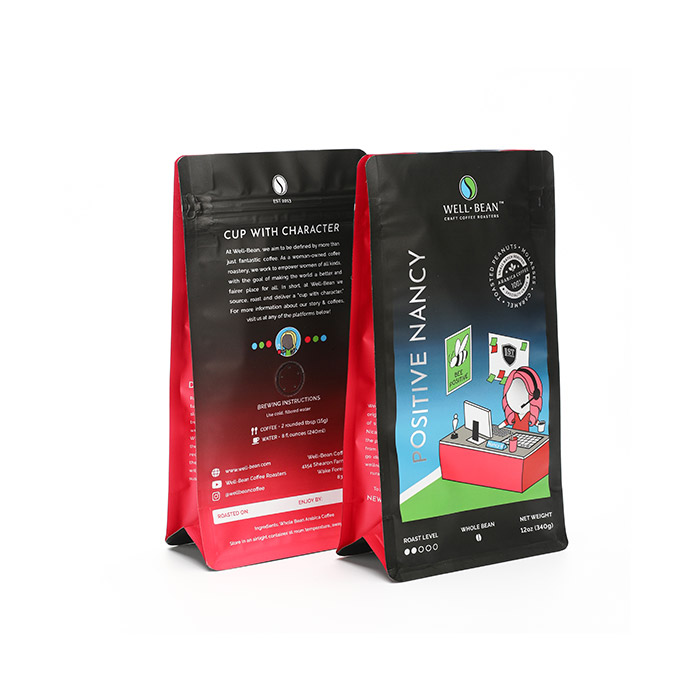
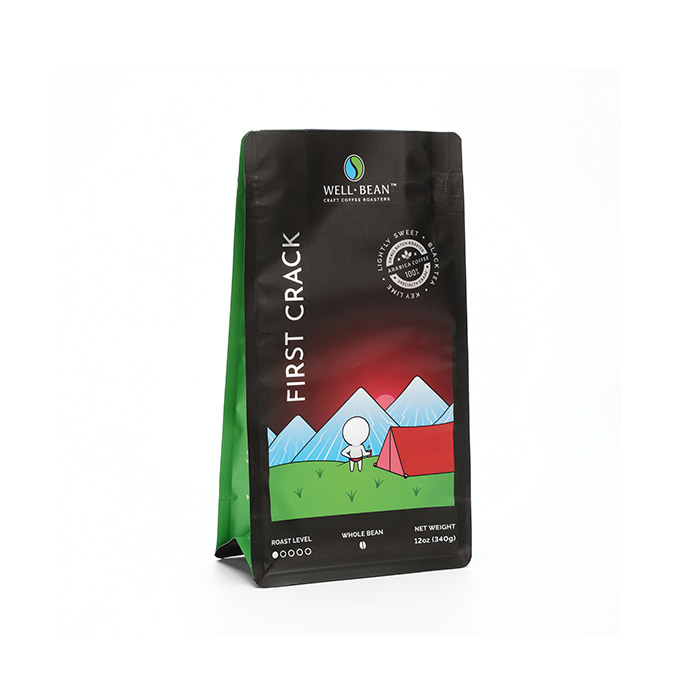
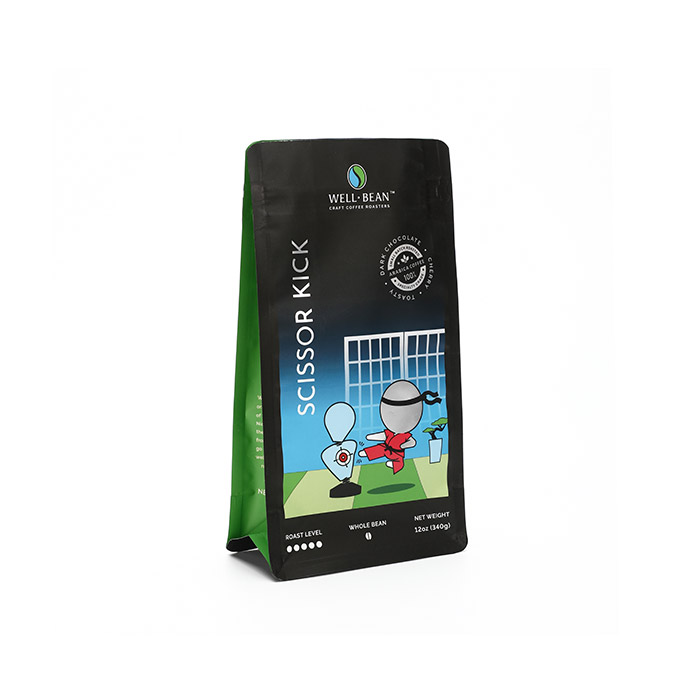
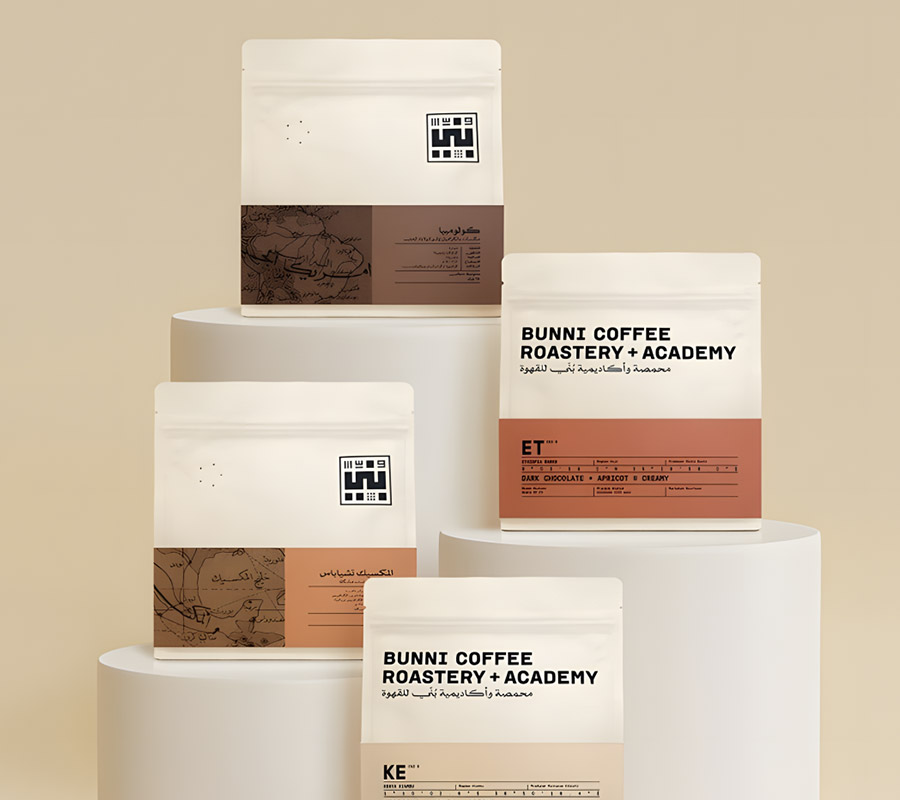
BIOPOUCHES supplies this custom flat bottom bag for coffee packaging. It has a structured rectangular base, side gussets and a resealable zipper top, and it is listed in a 130-micron plant-based material. Your artwork is printed by gravure. The base makes the bag easier to fill and keeps it standing on a shelf, and the zipper lets the customer close it after opening. Whether it suits your coffee comes down to sealing, dimensions and material structure, which are covered below.
Flat Bottom Construction for Coffee
The base is a flat rectangle, and the side gussets fold out as the bag fills, so the filled bag takes a squared shape. That gives you print space on the front, the back and both side panels.
Usable filling space is smaller than the outside dimensions suggest. The zipper and the top seal both take up height, so the bag has to be tall enough for the coffee plus the zipper area and the seal. Whole bean and ground coffee also fill the same bag differently. Sample filling with your actual coffee is the reliable way to confirm production dimensions.
A degassing valve is not a standard feature of this bag. If your coffee is packed soon after roasting, it is worth evaluating with us. Our other coffee packaging options show related formats.
Material and Coffee Protection
The material is listed as plant-based and described as biodegradable. How it actually performs at end of life depends on the complete structure and the documentation behind it. Coffee needs oxygen and moisture protection to hold its aroma and quality, so the material, barrier structure and sealing performance have to be evaluated together. The 130-micron figure is a thickness specification. On its own it does not tell you barrier performance or shelf life. Our page on plant-based packaging materials gives more background.
From Approved Artwork to Finished Bag
Our factory photographs show the route a bag takes: raw film, multi-color gravure printing, lamination, printed-film inspection, folding and forming, cutting and sealing, then finished-bag inspection. On a flat bottom bag these stages depend on each other.
Print registration has to line up with the fold lines, or side-panel artwork wraps onto the wrong face. The base folds have to form cleanly before sealing, because a crooked fold gives a bag that leans and corners that seal unevenly. Sealing has to suit the laminate, especially at the corners where several layers meet. You can see these stages in our factory and testing photographs.
Production Controls and Quality Checks
Production follows set procedures with inspection checkpoints, and production equipment is cleaned daily. For this bag the checks are print registration and alignment, film appearance and handling, bag dimensions, bottom folds and corner formation, zipper placement and operation, heat-seal consistency, and a visual check of finished bags.
Three lab instruments are relevant. A heat-seal tester is used on prepared samples to find suitable sealing conditions. An electronic tensile tester can measure seal-peel strength or other mechanical properties, when the right test method and specimen are used. A seal-integrity or leak tester helps find leakage paths under defined test conditions. These are sample tests. Not every bag goes through the lab, and we do not publish test values here.
Custom Printing and Ordering
Artwork covers the front and back panels and the side gussets. Leave allowance for folds and seals, because anything placed there gets cut, covered or bent. Keep barcodes and small text on flat areas. We review artwork against the bag layout before production, and our article on the flexible packaging printing process explains gravure in more detail.
The MOQ is 1,000 pieces. Final dimensions, material, printing options and production arrangements are confirmed during technical review and sample approval.
Discuss Your Custom Flat Bottom Bag
Send us your coffee product, fill weight, artwork, approximate dimensions and order quantity.
Discuss Your Custom Flat Bottom BagThe Packaging You May Like


Have a Question?
With BIOPOUCHES